
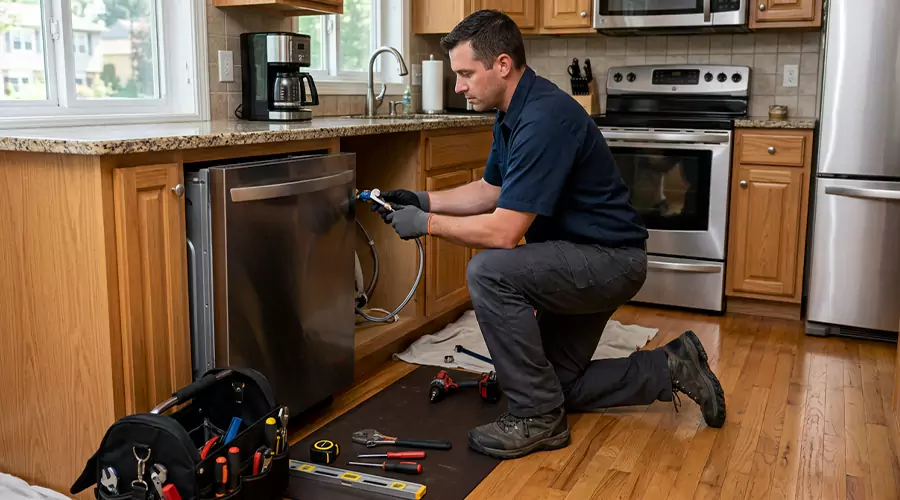
Knowing when to replace dishwasher units helps you avoid wasted repair money and poor cleaning results. It also helps prevent water damage in the kitchen.
A dishwasher should clean dishes well and drain without leaks. Replacement becomes the smarter choice when the appliance leaks often or leaves dishes dirty after a full cycle.
Loud grinding sounds and repeated repairs are also warning signs. Some dishwasher problems need a simple repair while major failures point to the end of the appliance lifespan.
Common Dishwasher Replacement Signs
Clear dishwasher replacement signs often appear before the appliance stops working completely.
Watch for these warning signs:
- Dishes come out cloudy or greasy.
- Water collects at the bottom.
- The door seal leaks.
- The machine makes grinding sounds.
- Rust appears inside the tub.
- Repair calls become more frequent.
- The dishwasher uses more water than expected.
If several of these problems happen together, replacement may offer better long term value.
Old Dishwasher Problems
Many old dishwasher problems start slowly and get worse over time. An older dishwasher may still run, but it may not clean well or drain correctly.
Worn spray arms, weak pumps, aging seals, and outdated controls can reduce performance. Older units may also use more water and energy than modern models.
Dishwasher Repair or Replace
Choosing dishwasher repair or replace depends on age, condition, repair price, and how often the problem returns. A simple repair can make sense when the dishwasher is newer and the issue is minor.Replacement may be smarter when the unit is old and the repair cost is high.
A good rule is to compare the repair estimate with the price of a reliable new dishwasher.
Dishwasher Lifespan
The average dishwasher lifespan is usually 9 to 12 years. Actual life depends on use level and water quality. Heavy daily use wears parts faster. Hard water can also leave mineral buildup inside the appliance.
Regular cleaning helps the dishwasher last longer. Every machine still reaches a point where repair costs stop making sense.
A major repair is often a poor choice when the dishwasher is near the end of its expected life. Replacement gives better value when the appliance already has age and repeated problems.
Quick Replacement Guide
| Problem | Possible Meaning | Best Decision |
|---|---|---|
| Poor cleaning | Spray arm or pump issue | Repair if newer |
| Water leak | Seal or hose problem | Inspect quickly |
| Rust inside | Interior wear | Consider replacement |
| Standing water | Drain issue | Troubleshoot first |
| Loud grinding | Motor or pump issue | Compare repair cost |
| Repeated breakdowns | Aging parts | Replace if old |
Dishwasher Not Cleaning Dishes
A dishwasher not cleaning dishes problem often starts with blocked water flow. Clogged spray arms and a dirty filter can stop water from reaching every dish.
Hard water can leave mineral buildup inside the machine. Weak water pressure can also reduce cleaning power during the wash cycle.
Start by cleaning the filter and checking the spray arm holes. Load dishes with open space so water reaches each surface.
Call for service when cleaning performance stays poor after basic maintenance. A weak pump or worn motor can stop the dishwasher from washing properly.
Dishwasher Leaking
A dishwasher leaking problem needs quick attention because water can damage cabinets and flooring. Moisture can also reach nearby walls and trim.
A worn door gasket can let water escape during a wash cycle. A loose hose or faulty water inlet valve can also cause leaks. Small seal repairs can make sense when the dishwasher is still in good condition. A cracked tub usually costs more to fix.
Repeated leaks are a strong replacement sign. Water damage can cost more than the appliance repair.
Dishwasher Repair Cost
Dishwasher repair cost depends on the failed part and the labor needed to reach it. The model and repair difficulty also affect the final price.
Minor repairs often make sense when the dishwasher is still cleaning and draining well. Common examples include a gasket, latch, hose, or door seal repair.
Major repairs need a closer cost review. Motor, pump, and control board problems can raise the repair bill quickly.
Replacement becomes the better choice when the repair costs close to half the price of a new dishwasher. A newer unit gives better value when the old machine already has age and repeated problems.
Broken Dishwasher
A broken dishwasher can disrupt your kitchen routine and add extra cleanup after every meal. Start with simple checks before you replace the appliance.
Check the breaker and confirm the dishwasher has power. Clean the filter and inspect the drain hose for blockage. Look at the door latch if the dishwasher will not start. A loose latch can stop the cycle before water enters the tub.
Hire a professional when the machine has no power or stops mid cycle. Repeated failure points to a deeper electrical or mechanical problem.
Dishwasher Efficiency
Poor dishwasher efficiency can increase utility costs and still leave dishes dirty. Older machines may use more water and energy than newer models.
A dishwasher that runs longer than normal may be struggling with weak parts or poor water circulation. Better efficiency can save money over time and improve daily performance.
Dishwasher Water Damage
Dishwasher water damage is one of the strongest reasons to replace an unsafe appliance. Water under the unit can damage subflooring and cabinets.
A slow leak can also create mold and musty odors. If leaks continue after repair, do not keep using the dishwasher without a full inspection.
Dishwasher Motor Failure
Dishwasher motor failure can stop washing and draining performance. The motor helps circulate water through the spray arms during the cycle.
Humming and grinding are common warning signs. A burning smell means you should stop using the dishwasher and schedule service.
Motor replacement can cost too much on an older dishwasher. Replacement often gives better value when the appliance already has age and other problems.
Dishwasher Rust Inside
Dishwasher rust inside can point to damaged racks, worn coating, or tub deterioration. Small rust spots on racks may be fixed with rack repair coating.
Rust in the tub or around structural areas is more serious. If rust spreads, it may affect cleaning performance and long term reliability.
Dishwasher Drainage Problem
A dishwasher drainage problem can leave dirty water at the bottom of the tub. This issue may come from a clogged filter, blocked drain hose, jammed pump, or garbage disposal connection.
Try cleaning the filter first. If water still remains after the cycle, the drain pump may need service.
Appliance Replacement Guide
This appliance replacement guide can help you decide when a dishwasher is no longer worth repairing. Replacement is often smart when the dishwasher is older than 10 years, leaks repeatedly, needs major repairs, or performs poorly after maintenance.
You should also consider replacement if parts are hard to find. A newer model can improve reliability and reduce kitchen stress.
Dishwasher Maintenance
Good dishwasher maintenance can delay replacement and improve cleaning results. Clean the filter regularly and remove food debris from the spray arms.
Run hot water at the sink before starting the dishwasher so the cycle begins with warmer water. Use the right detergent and avoid overloading the racks.
Simple care habits include:
- Clean the filter once a month.
- Wipe the door gasket.
- Check spray arms for clogs.
- Use rinse aid when needed.
- Keep the drain area clear.
- Inspect for leaks under the unit.
New Dishwasher Benefits
New dishwasher benefits include quieter operation and better cleaning performance. Modern rack designs also make loading dishes easier.
Many newer models include soil sensors and adjustable racks. Stainless steel tubs and stronger drying systems also improve daily use. A new dishwasher helps reduce handwashing after meals. It also gives the kitchen a cleaner look when the old appliance is stained or worn.
Replacement makes sense when the current dishwasher is loud or unreliable. Better cleaning and easier loading give you stronger value over time.
Dishwasher Energy Efficiency
Better dishwasher energy efficiency is a major reason many homeowners upgrade. Newer rated models can use less water and electricity than older units.
This can lower utility use while still delivering strong cleaning results. Energy savings may not pay for the full appliance quickly, but they add value over time.
Dishwasher Troubleshooting
Basic dishwasher troubleshooting should come before replacement when the problem looks minor. Simple checks can save money when the appliance has one easy issue.
Clean the filter and inspect the spray arms. Check the door latch and drain hose. Confirm the dishwasher has power. Look for error codes on the control panel.
Call a repair technician when the same problem returns after cleaning and resetting the machine. A proper inspection confirms whether repair or replacement makes more sense.
Kitchen Appliance Replacement
Kitchen appliance replacement should be planned before a complete breakdown creates an emergency.
If your dishwasher is old, inefficient, rusty, leaking, and costly to repair, replacing it may be the best move.
A planned replacement gives you time to compare models, finishes, noise levels, and installation costs.
It also helps you avoid rushed decisions after water damage or sudden failure.
Final Thoughts
Replacing a dishwasher is not always necessary at the first sign of trouble.
Minor clogs, dirty filters, and worn seals can often be fixed.
However, an older dishwasher with leaks, rust, motor trouble, poor cleaning, and high repair costs may no longer be worth keeping.
If replacement offers better reliability, improved efficiency, and fewer repair worries, it can be the smarter long term decision.